
Financing a Car in Lewiston: Credit Union Auto Loans vs. Dealer Financing
Choosing between credit union auto loans vs. dealer financing in Lewiston can determine how much you pay over the life of the loan and how smooth the car-buying process will be. This comparison is vital whether you’re buying a new car or a used car, because interest rate differences, loan terms, and dealership incentives can change your total cost. Read on to understand the advantages of credit union financing, what dealerships may offer, and how to secure the best auto loan for your situation.
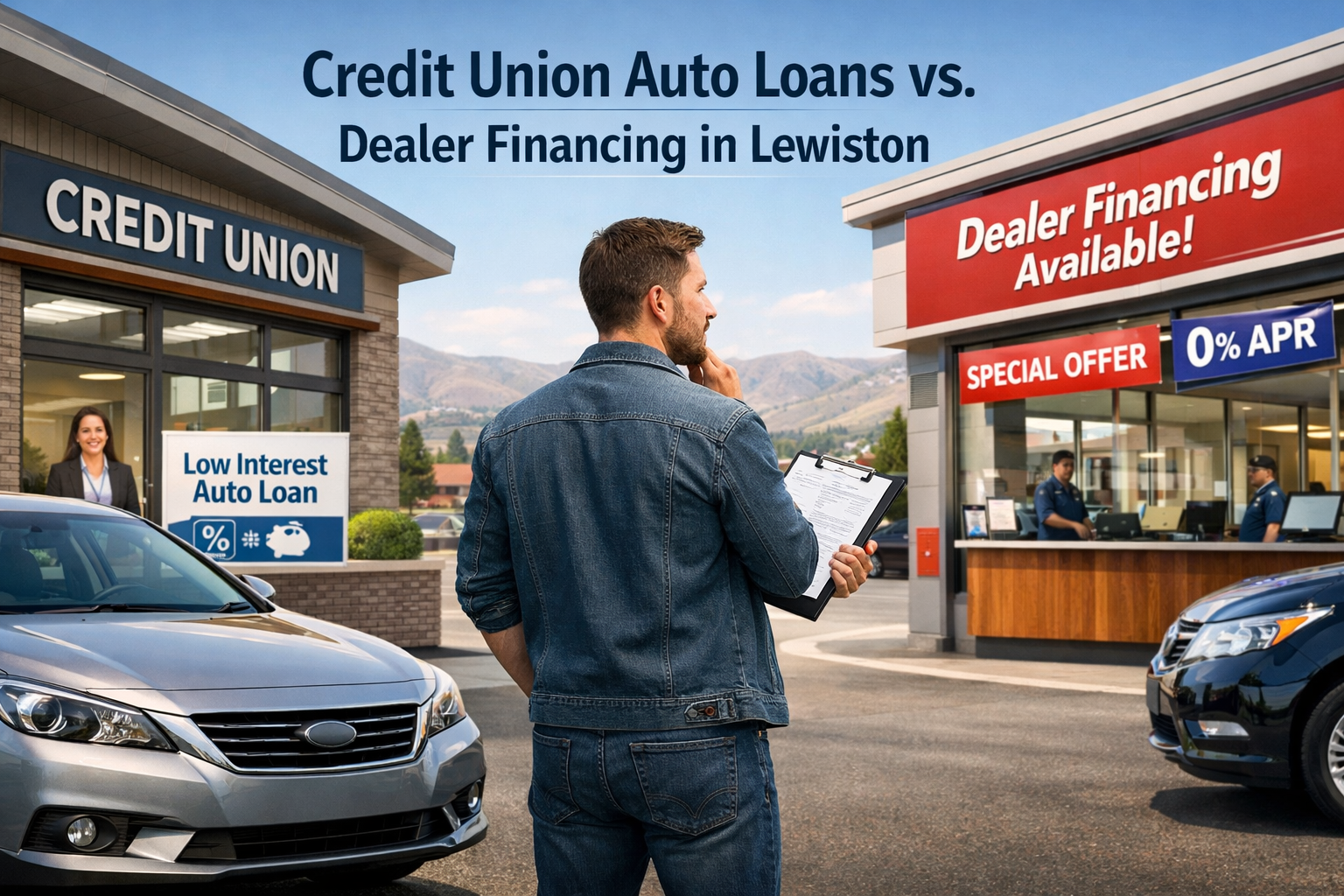
1. What are the main differences between credit union auto loans and dealership financing?
Credit unions and dealerships operate as very different lenders. Credit unions typically offer lower interest rate auto loans because they are member-owned, not-for-profit institutions focused on providing competitive interest rates and favorable loan terms. Dealership financing, often arranged through the dealership’s financing department with finance companies or captive lenders, can be convenient but sometimes comes with higher auto loan rates or dealer markups on the loan rate.
When comparing a credit union auto loan versus dealership financing, consider the loan rate, loan terms, and total cost of your loan. Dealer financing may include promotional incentives like 0% APR for well-qualified buyers, but credit unions often provide long-term savings with lower interest rates for similar loan terms, especially for used cars or borrowers with good credit scores.
2. How do interest rate differences affect the total cost of my car loan?
Interest rate is one of the most important factors when you finance your car because even a small difference in auto loan rate can translate into hundreds or thousands of dollars more paid over the life of the loan. Credit unions often offer lower interest rates — especially for members with strong credit — which reduces the total cost of your car loan compared with dealership financing where dealer may add spreads or rely on third-party lenders.
To illustrate, compare identical loan amounts and terms with a credit union loan versus a dealership loan rate. Utilize digital calculators to evaluate potential monthly obligations and total interest accrual. Shopping for a loan from a credit union and getting pre-approved gives you leverage to negotiate at the dealership and compare dealer financing offers objectively.
3. Can I get pre-approved from a credit union before visiting a Lewiston dealership?
Yes — getting pre-approved by a local credit union is a recommended step in the car buying process. A credit union loan application will provide a clear auto loan rate and loan terms so you can shop confidently. Pre-approval helps you understand your budget, shows sellers you are a serious buyer, and can prevent the dealership from steering you into dealer financing with higher rates.
Credit unions typically require a loan application, proof of income, and credit check to provide a credit union auto loan pre-approval. Getting pre-approved also lets you compare the credit union loan offer to any dealership financing offers, including special promotions a dealership may advertise for new or used cars.
4. Do credit unions offer better loan terms and longer loan periods than dealerships?
Credit unions tend to offer flexible loan terms, including competitive interest rates and sometimes longer loan terms for borrowers looking to lower monthly payments. While longer terms reduce monthly payments, they can increase the total of interest paid over the life of the loan, so it’s important to weigh monthly affordability against overall loan cost. Credit unions typically disclose the trade-offs so borrowers can choose loan terms that fit their financial goals.
Dealership financing may also offer varied loan lengths through their partner lenders or captive finance companies, and dealerships may push longer terms to meet monthly payment targets. Always compare not just the monthly payment but the APR and total finance charges from both the credit union loan and any dealership financing offers to find the best deal.
5. How does my credit score affect offers from a credit union vs. dealer financing?
Your credit score plays a central role in the auto loan rate you’re offered. Credit unions typically reward higher credit scores with lower auto loan rates and more attractive loan terms. If your credit score is excellent, you’ll likely receive the best interest rates at a credit union or bank. For borrowers with fair credit, credit unions and dealerships may both offer options, but lenders and dealership financing programs can differ widely in the auto loan rate they provide.
Dealerships may work with multiple finance companies and might be able to place borrowers with less-than-ideal credit into specialized programs, but these often come at higher rates or unfavorable loan terms. Applying to a credit union first can reveal your rate range and help you decide whether to accept dealership financing or negotiate better terms.
6. Are there advantages of dealer financing that credit unions don’t offer?
Yes — dealer financing can offer convenience and promotional incentives you won’t find at a credit union. Dealerships may offer limited-time specials like 0% APR on new car financing or manufacturer rebates when you finance through their captive finance company. These incentives can sometimes outperform credit union offers, especially for buyers with excellent credit financing a new car.
However, dealer may also add markups to the lender’s buy rate or include fees that increase your total cost. Always ask for the loan rate, loan terms, and any fees in writing. If a dealership’s special offer is genuinely better than a credit union auto loan rate, weigh the incentive against the long-term costs and consider getting pre-approved to compare offers side-by-side.
7. How do loan application processes differ between a local credit union and a dealership?
Applying for an auto loan through a credit union usually involves submitting a loan application, proof of income, and an identity check either online, by phone, or in person at a local branch. The credit union’s loan process can take anywhere from same-day decisions to a few days, depending on documentation and membership requirements. Local credit unions often provide personalized guidance and explain loan options like credit union auto loan rates and loan terms.
Dealerships often handle the entire loan application within the financing department and can provide immediate financing decisions by submitting your information to multiple lenders. That convenience speeds the car purchase process, but it may limit transparency — ask for the exact auto loan rate, any dealer markups, and the finance companies used to ensure you’re getting a competitive loan.
8. Should I negotiate price and financing separately at a dealership?
Yes. Negotiating the vehicle price separately from financing is one of the best tactics to avoid dealer financing pitfalls. When you negotiate the price first, you prevent dealer financing offers from obscuring the true cost of the car. After settling the purchase price, compare your pre-approved credit union loan and any dealership financing offers to choose the loan with the best auto loan rate and loan terms.
Bring your credit union pre-approval documentation to the dealership. This shows the dealer you have an approved loan option and gives you leverage to receive better financing offers. If the dealer tries to combine the price negotiation with financing, request that the salesperson separate the numbers so you can compare the credit union loan against dealership financing transparently.
9. Are there hidden fees or add-ons I should watch for with dealer financing?
Dealer financing can include hidden fees or add-ons such as extended warranties, GAP insurance, financing for accessories, and administrative fees that may be rolled into your loan. These can increase the total amount financed and the total interest paid over the life of the loan. Credit unions usually focus on the loan amount and APR and are less likely to bundle unnecessary add-ons into the loan without clear consent.
Before signing any financing contract, request an itemized loan offer. Verify the loan amount, APR, loan term, and any fees or additional products. If you’re financing through the dealership, ask to see the lender’s buy rate and any markups. If possible, decline add-ons at the dealership and seek separate quotes for products like warranties to compare costs independently.
10. How can I find the best financing for a used car in Lewiston?
Start by shopping local credit unions and getting pre-approved for a credit union auto loan. Local credit union loan officers can explain credit union auto loan rates, membership requirements, and loan options for used cars. Compare those offers with financing options available at Lewiston dealerships, including promotions from finance companies and manufacturer programs if buying a newer used or certified pre-owned vehicle.
Use a checklist to evaluate offers: APR, loan term, monthly payment, total cost of the loan, any fees, and whether add-ons are included. Consider negotiating price first, bring pre-approval paperwork to the dealership, and don’t be afraid to walk away if a financing offer doesn’t meet your expectations. Finding the best financing for your used car is about balancing convenience, interest rate, and total loan cost.
11. How important is the loan-to-value and down payment when choosing loan options?
Loan-to-value (LTV) ratio and your down payment influence the auto loan rate and loan terms you’ll be offered. A higher down payment reduces the LTV ratio, which can lead to lower interest rates and better loan offers from both credit unions and dealerships. Credit unions typically reward lower LTV with more competitive rates and may be more flexible on loan terms when you put more money down.
Dealership financing may be more willing to finance a larger portion of the vehicle price, but that could lead to higher interest rates or longer loan terms. Aim for a reasonable down payment to reduce monthly payments and the life of the loan while keeping an eye out for incentives that might make dealer financing attractive for short-term promotional loans.
12. What final checks should I do before signing any auto financing agreement?
Before signing, confirm the APR, loan term, total finance charges, monthly payment, and any early payoff penalties. Check your credit union loan offer and any dealership financing paperwork to ensure numbers match your negotiated purchase price and that no unexpected fees or add-ons are included. Request the loan disclosure and read it thoroughly to understand the life of the loan and total cost.
Also verify title, registration, and insurance requirements so there are no surprises after purchase. If you’re unsure, consult a loan officer at your credit union or ask the dealership to explain the financing line-by-line. Keeping copies of all signed documents and a clear comparison between the credit union auto loan and dealership financing protects you and ensures you got the best deal possible.
13. How do local Lewiston credit unions compare to national banks for auto financing?
Local credit unions often provide more personalized service and competitive interest rates compared with national banks. Credit unions tend to be community-focused and may offer special rates for members or flexible underwriting for local borrowers. Banks and national lenders can offer convenience and brand recognition, but credit unions generally aim to provide lower auto loan rates and member benefits.
When comparing local credit unions, banks, and dealer financing, evaluate APRs, loan terms, membership requirements, and any local promotions. Credit unions typically show their advantages through lower interest rates and responsive loan officers who can guide you through the loan process for both new and used car purchases in Lewiston.
14. When might dealer financing be the best choice for my next car?
Dealer financing can be the best choice when a dealership offers a genuine promotional offer — such as 0% APR or a significant rebate — that outperforms available credit union auto loan rates. For buyers with excellent credit, manufacturer-sponsored promotions through a dealership can sometimes provide the lowest total cost for a new car. Dealer financing is also convenient for buyers who prefer a one-stop shop for price and financing.
However, always compare the dealer’s promotional offer against a credit union loan pre-approval. Even with a tempting dealership special, it’s wise to calculate the total cost over the life of the loan and ensure no hidden fees or add-ons inflate the loan amount. If the dealership’s offer remains superior, confirm the terms in writing before committing.
15. How can I negotiate better financing terms at the dealership using a credit union offer?
Bring your credit union pre-approval to the dealership and use it as leverage. Show the salesperson or financing manager the credit union’s auto loan rate and loan terms, then request that the dealership match or beat that offer. Dealers often have flexibility to adjust terms or reduce markups when faced with a competitive, documented loan offer from a lender.
If the dealer cannot match your credit union rate, you can either choose to finance through the credit union or negotiate the vehicle price further. Keep your focus on the total cost of the deal — both price and financing — and be prepared to walk away if the dealer financing does not meet your expectations.
Summary: Key takeaways
- Credit unions generally offer lower interest rates and competitive auto loan rates, especially for used cars and members with good credit.
- Dealership financing can be convenient and occasionally offers promotional 0% APR deals, but may include markups or add-ons.
- Get pre-approved by a credit union to set your budget and strengthen your negotiating position at the dealership.
- Always compare APR, loan term, monthly payment, and total cost of the loan — not just the monthly payment.
- Negotiate vehicle price separately from financing and request itemized loan disclosures to avoid hidden fees.
Finding the right used car and the best financing in Lewiston means comparing credit union auto loans, dealership financing, and offers from banks. Consider interest rate, loan terms, the life of the loan, and any dealer add-ons. If you’re shopping at a used car dealership like Hells Canyon Auto Sales, a used car dealer in Lewiston, ID, take your credit union pre-approval and compare dealer financing offers to choose the best auto financing, auto loan, or car loan for your needs. Used car financing through a credit union or dealer both have advantages — make an informed decision to secure the best deal and drive away confident in your loan choice.